About Kate Morton

Writer of books.

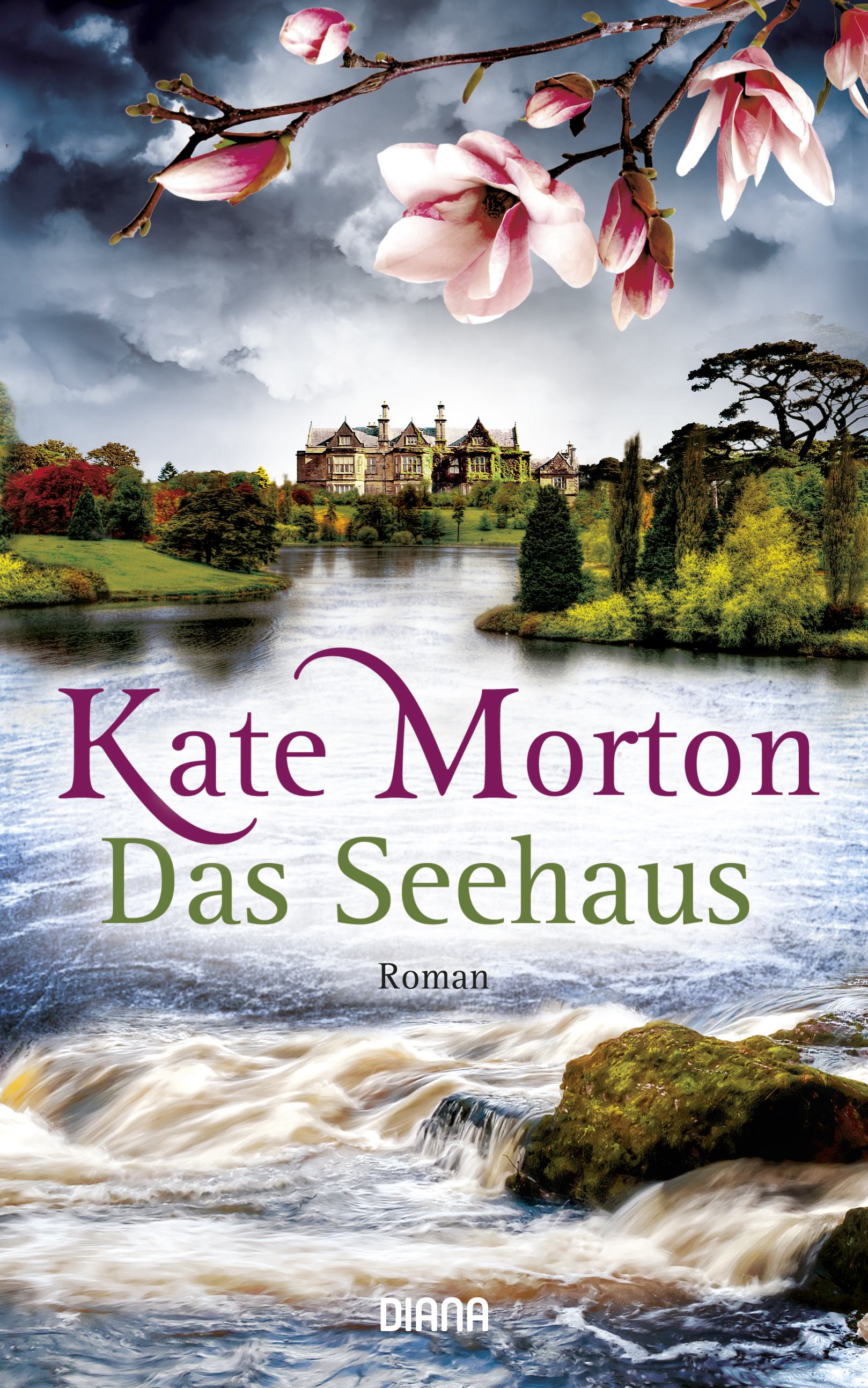
Update: Winter, Das Seehaus, mercy and truth

It’s been a long time since my last post and a lot has happened. Most notably, the wheel has turned, the old year has spun away, and here we are in 2016. Just like that. I’m writing from a small desk in a small room in London. The view outside the window is of chimney pots and stained old bricks and black metal downpipes. The sky is milky and the branches are bare. We really are in the deep midwinter. It’s been a strange year, though. Most of winter has been oddly mild, so although we watch the weather forecast and wonder about the chance of snow, there are daffodils sprouting on roadside verges and cherry blossoms pink against the white sky. It seems spring is coming, ready or not.

I have an exciting and busy few months ahead with the publication of The Lake House in a number of European countries. First up, Das Seehaus in Germany, on the propitious date of February 29th, followed by France in March and Italy in late April. I’ll be visiting each country for the book’s launch and hope to see you there.

Druck

Dates for the German tour are now locked in and I’m pleased to be able to share them with you here.

  • Tuesday, March 15 Düsseldorf: Buchhandlung, Mayersche Droste, Königsallee 18, 40212 Düsseldorf
  • Wednesday, March 16 Mannheim: Thalia-Buchhandlung, Am Paradeplatz C1 6-7, 68159 Mannheim
  • Thursday, March 17 Berlin: Hugendubel Bookstore in Berlin Steglitz, Boulevard Berlin, 2 Floor, Scholßstraße
  • Friday, March 18 Erfurt: Buchhandlung Peterknecht, Anger 28, 99084 Erfurt
  • Saturday, March 19 Leipzig: 3-3:30pm Book signing at the Bookstore at the Leipzig Book Fair
  • Saturday, March 19 Leipzig: Buchhandlung Hugendubel, Petersstraße 12-14, 04109 Leipzig

I’ll update this journal and the events page with the details of other launches and tours when I have them.

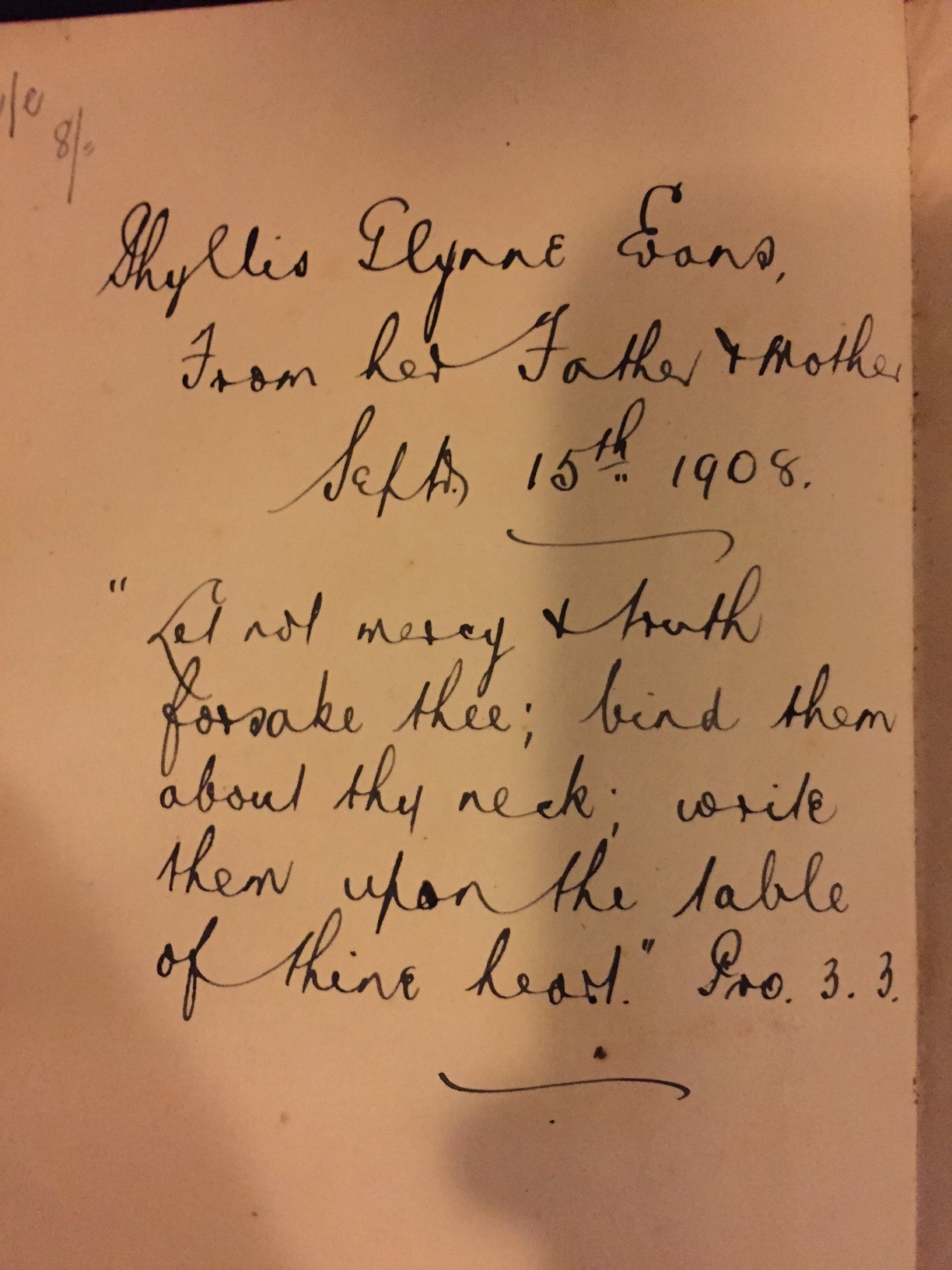
In the meantime, I’d like to share with you a photograph I took during the week. My eldest son was performing in his school music concert and the event was held in a local church hall. My youngest son didn’t quite grasp the importance of the occasion, nor was he willing to submit himself to the usual protocol expected of an Audience Member. Consequently, I spent rather a lot of time in the foyer with one eye on the concert and the other on an excitable toddler, high on the late night and the change in his routine.

I’m a compulsive reader – my eye is always drawn to text no matter where I find it – which is how I came to be perusing the old bible set out on the entrance table. Inside was a handwritten dedication from a father and mother to their daughter. Copied out carefully was one of the Proverbs.

Perhaps it was the uncertain strains of beginner musicians drifting from the hall, perhaps it was the thumping applause and small proud faces I could glimpse through the glass, perhaps it was the thought of a long-ago parent, long gone now, seeking to instruct their child on the way to live a good life, on how to be a good person. Whatever the case, I was moved by what I read on the frontispiece of that bible. It was clear and simple and it struck me that no matter your faith, the advice given to Phyllis Glynne Evans by her Father and Mother on September 15th 1908 was excellent: ‘Let not mercy and truth forsake thee; bind them about thy neck; write them upon the table of thine heart.’

Image

Update: Winter, Das Seehaus, mercy and truth2019-03-23T18:30:32+00:00

Update: Autumn, early reviews and book tours

So, here we are in October. From where I sit, typing this post, I can see through the window to where the leaves are turning yellow, ready to fall and scatter. I love the turn of the seasons: there’s something thrilling and wonderful about the year in transition. It gives me a frisson of excitement and makes me want to be writing. To write is usually my first urge when faced with feelings of gladness. I suppose that’s called inspiration, but if so it’s the sort driven by a general elevation in mood rather than by the arrival of a Specific Idea.

The only problem is, I’m a monogamous writer and don’t seem able to work wholeheartedly on a new story whilst still seeing the former into the world. And so, until December, when the first wave of book tour events are ended, I’m happily wedded to The Lake House. The characters and setting and story of the next book won’t disappear, but will remain as glimpsed figments, just out of reach on the edge of my peripheral vision – like a dream I look forward to revisiting.

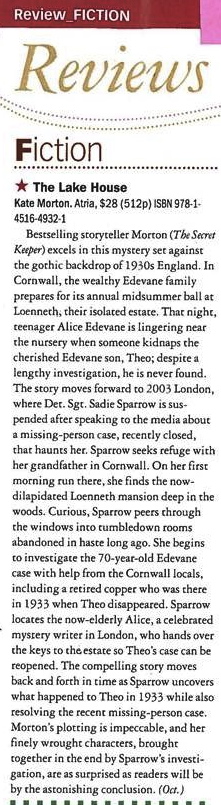
In the meantime, I’m pleased to tell you that there have been some very nice early reviews* of The Lake House. Publishers Weekly gave the book a starred review:

Image

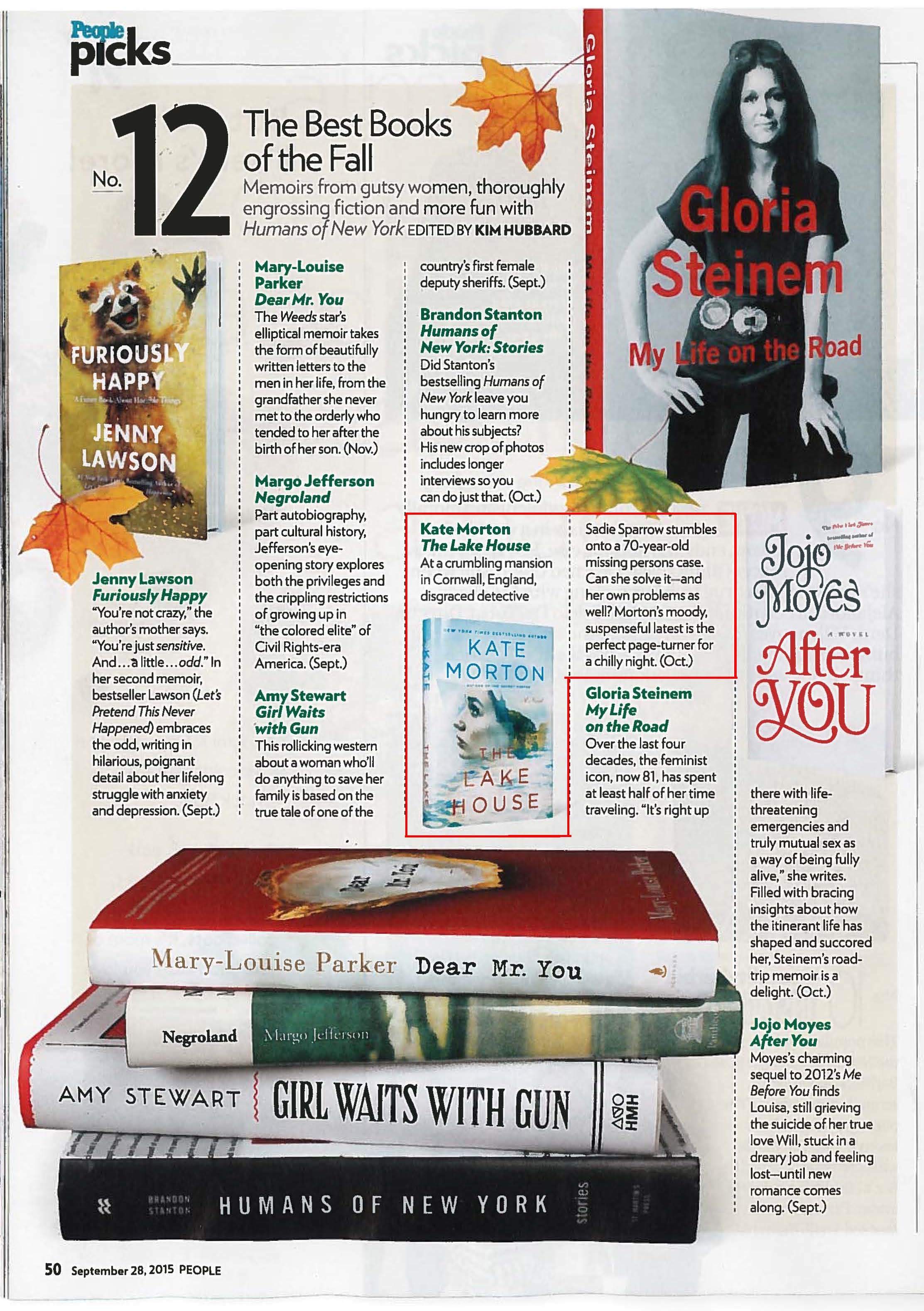
People Magazine named it one of The Best Books of the Fall:

Image 1

iBooks has selected it as one of the 25 Best Books of October, and The Lake House has been named as one of The November 2015 Indie Next List picks. Carol Schneck Varner from Schuler Books & Music in Okemos, MI, gave it the following lovely write-up:

The Lake House explores an unsolved kidnapping that occurred between the World Wars at an isolated country house in England. Morton here continues to do all the things she does so well: weaving together a multi-generational family story from numerous perspectives; showcasing different facets of the same events; and bringing a wonderfully complex plot together in a kaleidoscopic web of uncovered secrets, past and present. With delightful characters, fascinating settings, and a captivating mystery, Morton draws us into a world we’re sorry to leave. Highly recommended!”

***

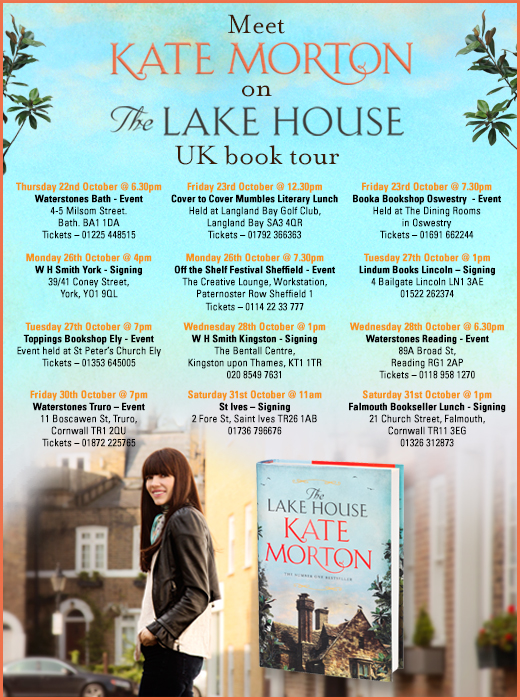
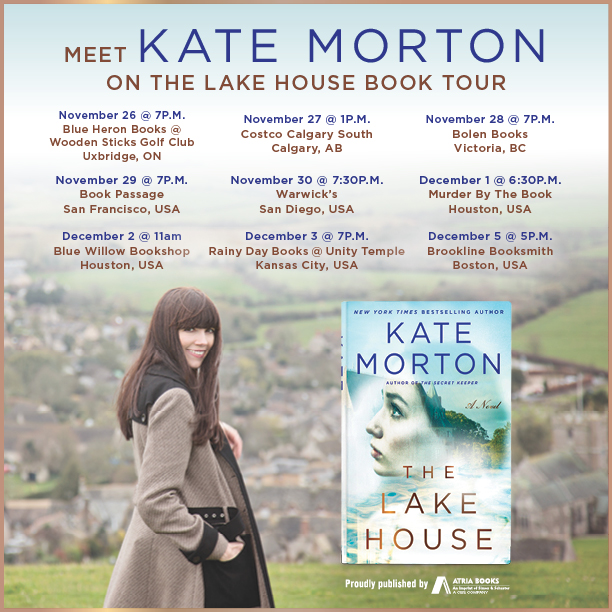
If you’d like to hear more about The Lake House, writing, reading, my thoughts on any of the above and more, I’ll be touring in the northern hemisphere throughout October, November and December. The Spanish language edition will be published in November, the Dutch in October, and the German in February 2016. I’ll keep you posted with all other release dates as soon as I have them. So far, the 2015 tour schedule looks like this.

UK:

Kate-Morton_Tour-Banner_v3

Canada/US:

49290-The-Lake-House-Tour-Graphic

***

* I was asked in a recent interview whether I read reviews and how I feel about them. The truth is, sometimes I do, other times I don’t. I don’t seek them out in newspapers, mainly because I don’t know they’re there until after the fact. But I don’t avoid them either. I like it when they’re positive, but I’m quite comfortable with differing opinions on my books: that’s one of the wonderful things about life, we’re all allowed to like different things.

The only reviews that make me feel a bit exasperated (no matter whose book they’re about) are those that don’t play fair: namely, critics who reveal too much of the plot or give away the mystery (!); and those who hold a book up to a set of expectations it never sought to meet. It’s a little like criticising a meal at a French bistro because it didn’t look or taste like Italian food. Pointless and nonsensical and, worst of all, of no help to readers.

Update: Autumn, early reviews and book tours2019-03-23T18:33:03+00:00

Video: Book Break in Cornwall

While I was in Cornwall over the summer, I took some time out from skylarking along coastal paths and eating copious amounts of clotted cream on scones, to spend a few days with Pan Macmillan shooting an episode for their YouTube channel, Book Break. It was a lot of fun, not least because the show is hosted by Leena Norms who is as perspicacious and delightful in person as she appears on screen. We talked about the magic of Cornwall, the writing process, structuring a novel, lost children, Taylor Swift, and even The Lake House itself. We also explored some of the most beautiful places in the south west.

Video: Book Break in Cornwall2020-02-08T10:50:17+00:00

Thought: But oh! that deep romantic chasm… A savage place!

IMG_8703I’ve been thinking about the sublime lately.

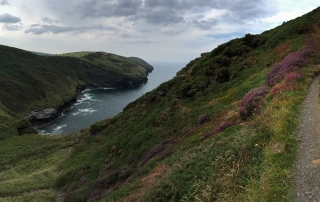
It’s being here, in north Cornwall, where the coastlines are rugged, the cliffs drop suddenly away, and the blue ocean seems to stretch forever.

The landscape is breathtaking. It’s dramatic and beautiful and craggy and flower-covered and enormous. And I feel small—happily, contentedly so.

For a long time, Cornwall was harder to get to from London than Europe. It wasn’t until the 1850s, when the railway opened up the countryside, that city dwellers were able to journey—cheaply and comparatively easily—to such locations.

How far away it must have seemed to travellers then, and how baffling. If I—a creature of the twenty-first century, whose life has prepared her with countless films, photos, books and the internet—still find the sight extraordinary, then what must it have felt like for people in the nineteenth century?

What a literal expansion of horizons is must have been. How stunning and majestic: the very edge of the world.

Image 4

No wonder so many poets of the eighteenth and nineteenth centuries, particularly those with a fondness for travelling far and walking long, felt nature’s pull so strong on their imaginations. Truth and beauty—there is each aplenty in these landscapes, but it’s not difficult to imagine such places invoking feelings of awe and terror either.

Image 1

* The title of this post is from Coleridge’s ‘Kubla Khan’.

Thought: But oh! that deep romantic chasm… A savage place!2020-02-02T11:12:30+00:00

Interview: Library Journal

I had the opportunity recently to speak with Barbara Hoffert from Library Journal about books, in particular The Lake House. I love libraries, and could talk about writing all day, so it was a real pleasure. The interview has just been published, and if you’re interested in my thoughts on structuring novels, narrative rightness, and living history, you can read them here.

Interview: Library Journal2020-02-09T10:04:05+00:00

Update: The Lake House

The Lake House will be released on October 20th in the US and Canada, October 21st in Australia and NZ, and October 22nd in the UK. I’ll be publishing more information, including videos and tour dates, very soon.

In the meantime, here’s a glimpse of what you can expect…

***

An abandoned house…

After a particularly troubling case, Sadie Sparrow is sent on an enforced break from her job with the Metropolitan Police. She retreats to her beloved grandfather’s cottage in Cornwall but soon finds herself at a loose end. Until one day, she stumbles upon an abandoned house surrounded by overgrown gardens and dense woods, and learns the story of a baby boy who disappeared without a trace.

A missing child…

June 1933, and the Edevane family’s country house, Loeanneth, is polished and gleaming, ready for the much-anticipated Midsummer Eve party. For Eleanor, the annual party has always been one of her treasured traditions, but her middle daughter, Alice, sixteen years old and with literary ambitions, is especially excited. Not only has Alice worked out the perfect twist for her novel, she’s also fallen helplessly in love with someone she shouldn’t. But by the time midnight strikes and fireworks light up the night skies, the Edevane family will have suffered a loss so great they leave Loeanneth and never return.

An unsolved mystery…

Seventy years later, in the attic writing room of her elegant Hampstead home, the formidable Alice Edevane leads a life as neatly plotted as the bestselling detective novels she writes. Until a young police detective starts asking questions about her family’s past and seeking to resurrect the complex tangle of secrets Alice has spent her life trying to escape…

Update: The Lake House2024-04-11T04:02:38+01:00

Memoir: We Were From the Mountains

In 2009 the Brisbane City Council asked me to contribute to an anthology they were publishing called One Book Many Brisbanes. I grew up on Tamborine Mountain, a rainforest community in the hinterland of the Gold Coast, about an hour’s drive south of Brisbane, but both of my parents had been born and raised in Brisbane and I’d always considered it the big city to my mountain home. I came to know the place better after I moved there to go to university. I met and married my husband in Brisbane, had three sons there, and by and by a not-insignificant portion of life was passed on the slopes of Paddington; and yet, when I sat down to write my essay, it seems that my mind did not fix on those events, that place: it went back further still. For I have known two Brisbanes in my lifetime and they refuse to merge, both held simultaneously and discrete in my memory. There is the Paddington of my adult life, in which I move with comfort and ease; and there is the Brisbane of my childhood, a strange, shimmering place, where exotic things like grandparents and Christmas windows and council buses belong, where it is always hot and I am an outsider, a mountain kid, observing, admiring, and always taking notes.

If you prefer to listen, rather than to read, you can do so here:

We Were from the Mountains

We were from the mountains and Brisbane was the Big Smoke. We didn’t go often – petrol was expensive and our budget didn’t stretch to joyrides – but at some point, in the long summer holidays, Mum would take my sisters and me to see Nana. ‘A visit to the City,’ we used to call it, and we always wore our best clothes.

Our car was a mustard-coloured Triumph that had brought us from South Australia a few years earlier and we drove with the windows down, bugs flying in with the noises, as rainforest (whip birds, water tumbling over rocks) gave way to the heat of the bush (cicadas, the sound of sunlight stretching) then, finally, the burn of brake pads as we crossed the rickety bridge in the bottom gully – the one that flooded when it rained and turned our mountain into an island.

A quick stop for me to throw up (I never could resist reading in the car) and we were away again, up the Pacific Highway, legs sticking to the vinyl seat, bickering over whose skirt had strayed across whose upholstered line, until Mum, driven mad in the front, would start the competition: who could see the buildings first? And we’d fall silent, until somewhere around Gaza Road when at last the high-rise towers rose into view.

When we finally reached Stafford, Nana would be down the front beneath the Y-shaped frangipani, waiting to pull up the metal rod and swing open the gate. We always parked on the grass in front of the house. People didn’t fill their yard with garden beds then, not in Brisbane, and there was no need for a garage as Nana didn’t drive. This fact seemed amazing and somehow impressive to us, like not being able to swim, or work a video player; it was a choice that marked her immediately as of another age.

Nana was soft and pretty, with papery pale skin and the blue eyes of a young girl. She used an umbrella in the sun, long before it was fashionable, having suffered a fierce burn in her youth. (She’d been twenty years old, the war, which was gathering in the wings, had not yet burst onstage, and when she was invited by friends to take a pleasure cruise along the Brisbane River, she was delighted. The burn took years to heal and Nana never again underestimated the Queensland sun.)

Hers was a Housing Commission home, a good, honest house, she’d say proudly, built with hundreds of others in the spate of postwar optimism which divided Happy Valley into clean, neat blocks holding clean, neat dwellings, intended for clean, neat families. In 1955, the Connelly clan had waved goodbye to the fibro cottage they’d called home on the muddy flats of Cribb Island, and taken up their suburban dream on the slopes of Stafford.

The block climbed away from the street so that the front of the house was high-set while the back cut into the hill, and the house itself had the long, strong legs of a shoreline fisherman. We’d been warned numerous times to be careful on the front balcony and were under strict instructions not to emulate our mum’s childhood game of lowering her baby sister over the edge in a rope-tied basket.

While Nana and Mum shared a pot of tea, my sisters and I headed straight out the screen door into the backyard. There was a huge mango tree against the top fence, with glossy leaves and an embarrassment of fruit, and we’d climb as high as we could, amassing mangoes along the way. From our bower among the branches, we’d peg them at the incinerator, one by one, seeing how many we could bullseye down the chute. We ate them, too, straight off the tree, stringy sun-warmed flesh and juice leaking down our arms. (Once I ate too many and was sick all afternoon in nana’s pink porcelain bathtub.)

Time was different then. The day slowed as the heat thickened, and eventually we would leave the tree to poke about in the external laundry, pretending it was our own cottage in the middle of an enchanted forest. Or a time machine capable of transporting us to a million different locations. The old Hoover washing machine and its wringer were the controls, and the boiler and pine stick poker Nana used to wash sheets became weapons to fend off our adversaries.

Sometimes our enemies were especially wily and we needed the added power of the Hills hoist. We’d wind it as high as it would go, then sprint from the top of the yard and launch ourselves into space. Round and round I flew, muggy breeze on my face, laughter erupting from deep in the pit of my stomach. And, in the yellow-green blur of the yard, I sometimes fancied that I glimpsed three ghostly girls, Mum and her sisters, playing at tightrope on the rim of the fence.

We always made enough noise to bring Nana’s neighbours into their backyards. They were a never-changing cast – people didn’t move as much then, nesting for life rather than shifting with the market. Nana knew when to make her entrance, emerging from the kitchen and shuffling to meet them at the shared fence. We’d be called over for inspection and made to stand on the old cement steps that had been pushed against the wire when the dunny was made defunct. Remarks were passed about how much we’d grown, and Nana would beam. They knew everything about us – awards we’d been given for science projects, ballet exam results, stars on the classroom chart – but we never knew their names.

When the accomplishments of various grandchildren had been compared and all declared gifted (though each woman clung silently to the certainty of her own brood’s superiority), we’d be dispatched once more with instructions to find somewhere cool to play until lunch was ready. With the sun high in the sky, we’d retreat into the cool and the dark behind the massive hydrangea bush at the bottom of the front stairs. From there we’d peer through the wooden slats at the sloping dirt floor beneath the house.

The door to the shadowy world was padlocked so we had to spy from a distance the hazy piles of mysterious items assembled in the middle: abandoned bicycles and suitcases, an ancient dog cart, and things belonging to the grandfather we’d never met. We knew his name though – Hughie – and we’d seen his picture: the rakish grin, black Irish eyes and old-fashioned suit that gave him a certain glamour, the air of a long-ago movie star. It was strange looking at that mischievous, handsome face, sharing a laugh with the camera, unaware that his end would come too soon.

He used to pick Mum up from evening classes at the high school in Kelvin Grove when she was studying for her Senior, and embarrass her sometimes by making proud declarations to his mates at the Stafford Bowls Club about what a hard worker his girl was. ‘Works all day for the Council and studies for Senior at night,’ he’d say, causing her to smile against her shoulder, wilting under the weight of such public attention.

One night, in the car, she complained about being tired and not liking her work. It wasn’t fair, she said, that she had to do both while her friends were still at school full-time. Without taking his eyes from the road, Hughie put her straight: ‘Do you think I like my job?’ He’d been twelve when one of his brothers arrived at school to fetch him. ‘Come on, mate,’ he’d said. ‘Dad’s hurt his leg and Mum says you gotta come home; it’s time to get a job.’ Hughie drove a delivery van for a small-goods company and if it wasn’t what he’d dreamed of, it was a job and a man’s duty.

He was the sort of dad who took his daughters fishing, laughing when the ‘Billy-Lids’ baulked at threading the mullet-gut on the line. He liked a beer at the bowls club after work and had a habit of singing ‘Galway Bay’ all the way home. In the evenings, he’d sit on the sofa and his girls would take turns on his shoulders, styling his hair with brushes and ribbons, giggling as they tied it up in bows.

He died when Mum was sixteen, on a camping trip at Kingscliff. The aneurism had chased him in his sleep and caught him unawares. His twin sister lived forty years after him, and we wept for both of them at her funeral. The lifetime Hughie had missed, all the cracking Brisbane storms, the coastline left un-fished, the grandchildren who’d have lined up to tie ribbons in his hair. Nana never remarried, but not for lack of offers. She was resolute: it was one thing to be a young man’s darling, she said, but she wasn’t going to be an old man’s slave.

We always ate lunch at Nana’s table in the centre of the kitchen. It had started its life as an art deco wooden piece but disappeared one morning in the late fifties to be returned, rather mysteriously, a week later, outfitted for the new decade: a red laminex top with chrome edging, the square wooden legs replaced by cream metal cylinders and black rubber feet. It was the same table Mum had been sitting at in the early sixties, when her big sister came running home from a friend’s house and produced a mysterious white bulb. ‘It’s garlic,’ she’d told her stunned audience. ‘The Italians cook with it. It’s just like onion but you hardly need to use any.’

Not that Nana used garlic when she made lunch for us. We had roast chicken and potatoes, with peas she’d shelled herself, followed by jelly and two fruits. And there was always lemonade to drink. When Nana knew we were coming, she’d walk the two kilometres to the shops on Stafford Road, returning with a string bag full of canned fizzy drinks with which to spoil us.

After lunch, I would escape to the spare room, where a narrow bookshelf bowed under the weight of precious volumes that Mum and her sisters had collected when they were girls. School Friend and Girls’ Crystal annuals from every year in the 1960s, a different sister’s name on each title page. I used to trace my finger over my mum’s name (the one from before she got married and became my mum) and the sketchy portraits drawn in biro, her sure, artist’s hand evident even then. The same style, the same doodled faces that adorned the backs of envelopes at our home in the mountains.

On rare occasions, we were allowed to ‘rest’ in Nana’s room. The blue chenille bedspread, home to the dolly with an empty neapolitan ice-cream tub beneath her crocheted skirt, was always perfectly smooth, and the grey laminex dressing table housed a colourful array of bijou necklaces, bangles, and earrings, the sort Ava Gardener wore in the black-and-white films we watched sometimes with Nana in the afternoons. There was a powder puff, too, sitting in a bowl of musky talcum on top of a lace doily, and wedding photos of our aunts wearing beehive hairdos and very short dresses, and one of our mum and dad. ‘We were dead then,’ my sister said solemnly, as we gazed at their smiling faces.

A lot seemed to have happened when we were dead. We caught the threads of stories and embroidered the details ourselves. I daydreamed about the night Nana was caught dancing with an American soldier on the footpath outside a café on St Paul’s Terrace by her stern Parliamentarian father; the childhood teasing of her little cousin, Jackie, under whose chair she threw her lunch crusts, and who she made pull her about the Spring Hill garden in the little dog-cart; Hughie’s large Irish family and their childhood in Windsor, the nick- names they had for one another (his was Brewster-Toddles); and the night he and Nana met and fell in love, when one of her sisters brought him home to meet the family.

When dusk fell and the visit was almost over, we’d pile into Nana’s pink tub. They were always lovely deep baths (a rare privilege for us mountain kids) because Nana was on town water. The soap smelled of oats and our nighties felt different just for being worn in a new place. While Mum loaded the car, my sisters and I knelt side-by-side on the edge of the armchair and peered through the aluminium blinds at the twinkling suburbs, rippling towards the night-time city. Views weren’t the privilege of the wealthy then, and we thought it looked like Fairyland, or Oz, glittering in the distance.

A kiss on Nana’s papery cheek, and we folded ourselves into the back seat of our Triumph, ready to leave Brisbane and all its exotic sights and sounds. And, as we drove away, we watched through the rear window, the single dainty figure beneath the humming porch light, becoming smaller and smaller as she waved at us, before disappearing again inside her house on the Stafford slopes.


Kate Morton, Brisbane, 2009

Memoir: We Were From the Mountains2020-02-19T10:48:12+00:00

Article: My Country Childhood

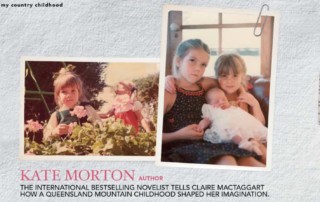
There’s an article in this month’s Australian Country Style magazine, written by Claire MacTaggart, about my childhood on Tamborine Mountain. It was such a lovely piece to be involved with – the older I get and the more I write, the clearer it is to me how enormously my childhood experiences influence the way I see the world. Anyone who’s read The Secret Keeper will recognise the Tamborine Mountain of my memory in the chapter featuring Vivien as a girl: running down to the creek, hiding under the ferns, watching the summer storms roll in – these are my experiences, just as they belong to Vivien. But it is more than that, too. It seems to me now that the landscape of childhood – the experience of place when we are growing up – becomes an inextricable part of a person and the palette of their imagination. For my part, I know that even my novels that aren’t set on the mountain are informed by the things that I saw and felt and smelled and heard and thought about as a child, and are therefore very much related to the place that I called home.

***

You can read the article HERE.

Article: My Country Childhood2020-02-10T09:57:40+00:00

Essay: On bookstores and booksellers

Many writers have stories about the person in their formative years who handed them the right book at the right time, and it just so happens that mine was a bookseller. His name was Herbert Davies and in 2009, when I was asked to address the annual conference for independent booksellers in Australia, I was glad to be able to reflect upon the part he played in shaping my early reading habits and, as a consequence, the rest of my life.

If you prefer to listen, rather than to read, you can do so here:

On Bookstores and Booksellers*

I’ve always been a reader. I read, voraciously, long before I ever entertained ideas about becoming a writer, and I wasn’t fussy. Black print on a white page was pretty much the only specification I had—sure, a magic faraway tree or a set of chipper English school children solving mysteries and devouring tins of condensed milk improved matters, but I’d make do without. I needed to read. I didn’t know what else to do with myself. I still don’t. A book before school, a book afterwards, in the bath, in the car, in the boughs of avocado trees, in front of the television. I’d read the back of the telephone bill if it was all I had in front of me.

Then, when I was ten, something changed. I met my first proper bookseller. His name was Herbert Davies and his bookstore was not a particularly magical setting. In fact, it was very basic—plain grey concrete block walls and a few old library shelves at the front of a shop in a newly-built centre on Tamborine Mountain, the small rainforesty village where I grew up. Herbert’s wife, Rita, ran a little drama studio from behind a set of screens at the rear of the shop, which is how I came to meet him. I was early for class one day and I got caught, the way you do, in the aisles of his shop. I was flicking through pages and had thought myself quite alone when all of a sudden, a rich, melodious voice sounded, as if from nowhere. ‘May I help you?’

In the far corner, slumped behind a counter, was the owner of the voice. Herbert looked like he’d come straight from the pen of Quentin Blake. A scribble of a man. Frail and fine and stooped from a knot at the centre of his back. Beige slacks with grease spots clung to the marbles of his knees and tufts of white fluff sprouted from various fertile spots on an otherwise smooth scalp. There was a magical sort of haze about him. It turned out to be tobacco smoke. He looked like a character from a children’s story, I thought at the time. A fairy tale. A scary one.

He was over seventy when we met, a proud Welshman who’d started his working life as a fourteen-year-old in a munitions factory but turned to writing poems and plays during service in Burma during the second world war. He belonged to that group of Welsh writers and actors including Dylan Thomas, Richard Burton and Rachel Roberts, and had become head of Radio Drama for the Welsh BBC before moving to Australia with Rita, a repertory actress.

Despite the fact that he scared the living daylights out of me on our first meeting, we became great friends over the following two decades. ‘May I help you?’ he had asked, and help me he did. Meeting Herbert Davies changed my life. He had all the books they didn’t give you in school and a sixth sense for knowing just which one to recommend; he introduced me to Shakespeare and Milton, Walt Whitman and The White Hotel. He gave me Under Milk Wood and found a cassette recording of Richard Burton reading it. He urged me to read and travel and later, to write. He understood that life and people and books and theatre and stories are all inextricably linked and that reading is one of the best ways to find new questions to ask.

His house contained as many books as his shop, but he had the entire collection catalogued in his brain. Conversation only had to shift in a particular direction for him to remember a book he had on the subject.  To see him home in on a target was a thing of great beauty: his impressive brows would furrow, then a single finger, pale and smooth as a candlestick, would rise as he hobbled wordlessly to a distant wall of books. The finger would hover for a moment, as if magnetised, above the spines, leading him, finally, to slide the perfect book from place. And that, I’ve always thought, is the bookseller’s gift.

A bookseller is a person who sells books. And yet booksellers do much, much more than that. A bookseller is a listener, an empathiser, a supplier, a matchmaker. They are one of Malcolm Gladwell’s connectors: people with a whole shop of shelves loaded with good friends, just waiting to go home with somebody. Each reader is different—their needs, their desires, their past reading-relationships—and a bookseller has to be able to assess all these things within moments, to read minute shifts in the countenance of their customer, before coming up with the perfect recommendation.

I know I’m not alone in the way I feel about bookstores: the sense that just by stepping through the doorway I’ve gone down the rabbit hole, beyond the back of the cupboard, to the top of the faraway tree. There are countless others who value the experience of disappearing amongst beautiful books in bricks and mortar shops run by expert booksellers: the sort who read and think, who love and promote books, who know that what they’re selling is so much more than a bound set of pages. These are the people who put books in the hands of children and parents and those for whom the choice of what to read may seem daunting. Frontline soldiers in the battle for literacy. And having seen the faces of my son’s classmates light up when I read them The Enchanted Wood last year, I know that’s a battle well worth fighting.

Kate Morton, Brisbane, 2009


*My literary matchmaker happened to be a bookseller (playwright/theatre director), but this essay could equally apply to librarians, whom I also salute for the tremendous work they do in bringing books and people together. If you’d like to read more about Herbert and Rita and my childhood on Tamborine Mountain, you can do so here.

Essay: On bookstores and booksellers2020-02-17T17:06:58+00:00

Video: In conversation with Culture Street

It was such a pleasure to chat with Sophia Whitfield from Culture Street about The Secret Keeper. I hope you enjoy the conversation. (And a small self-correction because the details always matter: Clive, my wonderful Blitz-time guide, was wearing a poppy in his lapel, not a carnation.)

Video: In conversation with Culture Street2020-05-05T05:12:43+01:00
Go to Top